Podcast: Play in new window | Download (Duration: 1:07:16 — 61.6MB) | Embed
Subscribe: Apple Podcasts | Email | RSS | More
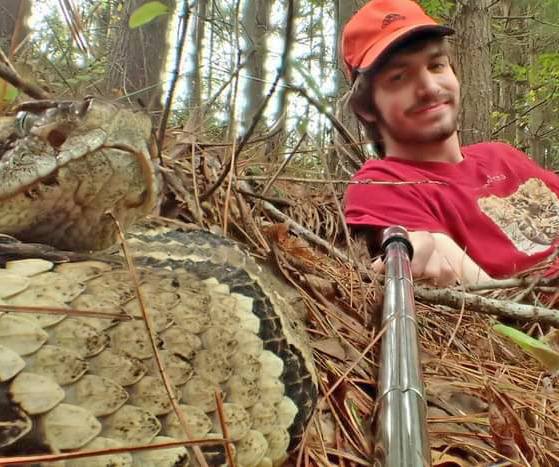 Hello everyone and welcome to Episode Seventy Three! Tomorrow is Thanksgiving here in the US and I wish everyone a good holiday. It’s good to be back in the studio again after a few weeks off.
As always, I want to say thank you to all of the show’s patrons! I’m grateful for everyone’s contributions and it does keep the show rolling along. And if you’re out there listening and you would like to kick in a few bucks, it’s easy to do, you simply go to the So Much Pingle Patreon page. You can support the show for as little as three bucks a month – less than a fancy cup of coffee! You can also support the show via one-time contributions via PayPal or Venmo (please contact me via email to somuchpingle@gmail.com).
Our guest this week is Zach Truelock, an Indiana native who is currently doing some very important conservation work in Florida. Zach has been involved with a number of very cool herp conservation projects over the past few years, and also a co-creator for the Life Underfoot YouTube channel. I want to highlight a few links for Life Underfoot, some of which we talk about in the episode:
Can We Save North America’s Rarest Salamander?
Spotted Salamanders In A Vernal Pool
Timber Rattlesnake Male Combat
Thanks for listening everyone! And as always, please keep the comments and suggestions coming, and please take time to rate the show on your podcast platform! The show email is somuchpingle@gmail.com, and there’s also a So Much Pingle group on Facebook, for discussion, comments, feedback, suggestions, herp confessions, tips for herping better, etc.
-Mike
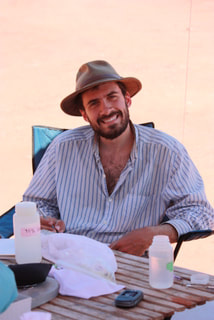
 Hello everyone! Episode Nine finds us both in and out of the water with photographer/herper Matt Sullivan. Two shows in a row where we dip ourselves in the drink to visit with fascinating creatures! We’ll have time to dry off before our next installment, but for the moment, we’ll talk with Matt about his experiences photographing both herps and cool aqua-creatures. Matt’s underwater camera housing is featured in photo left – an awesome rig.
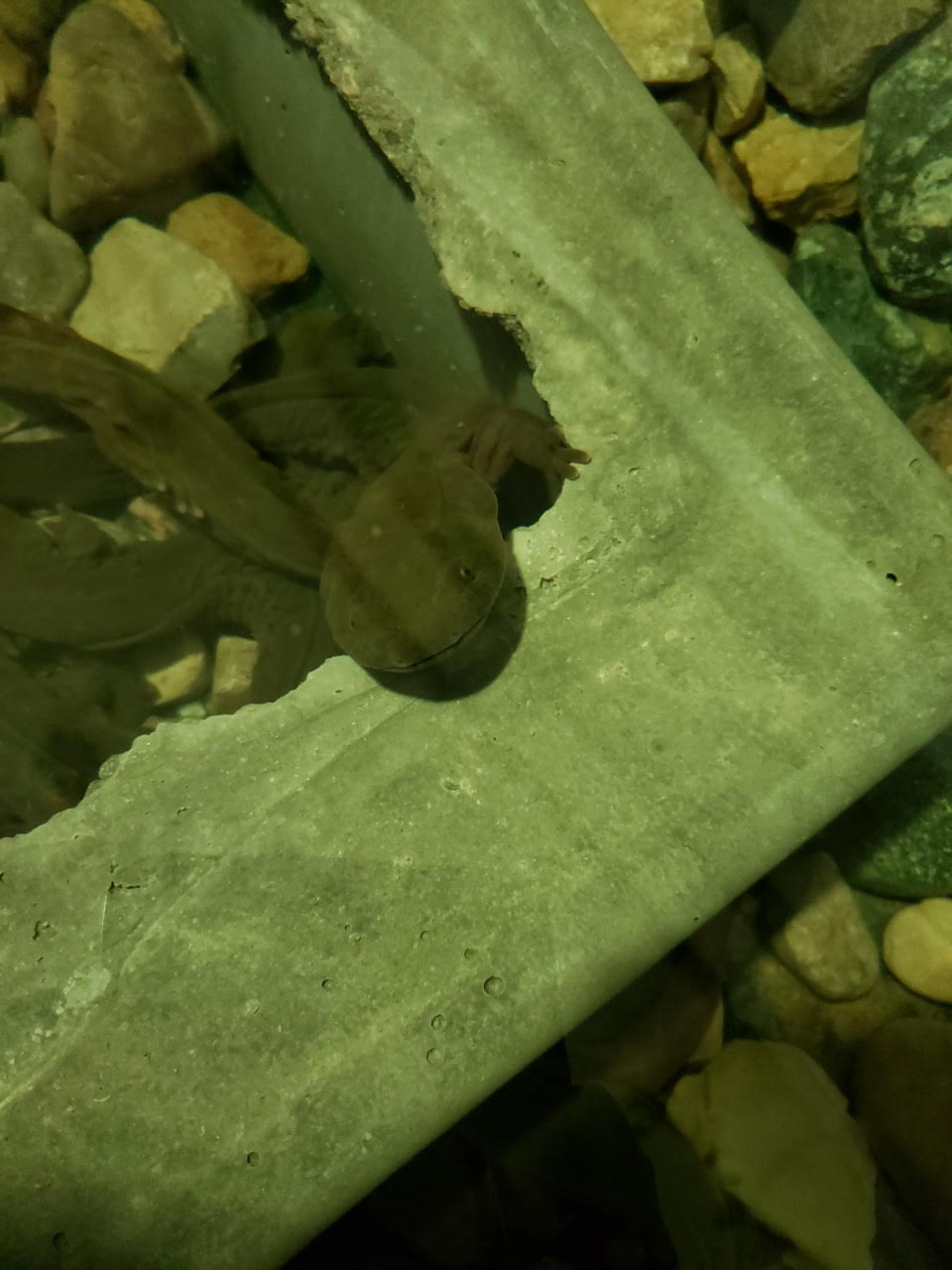
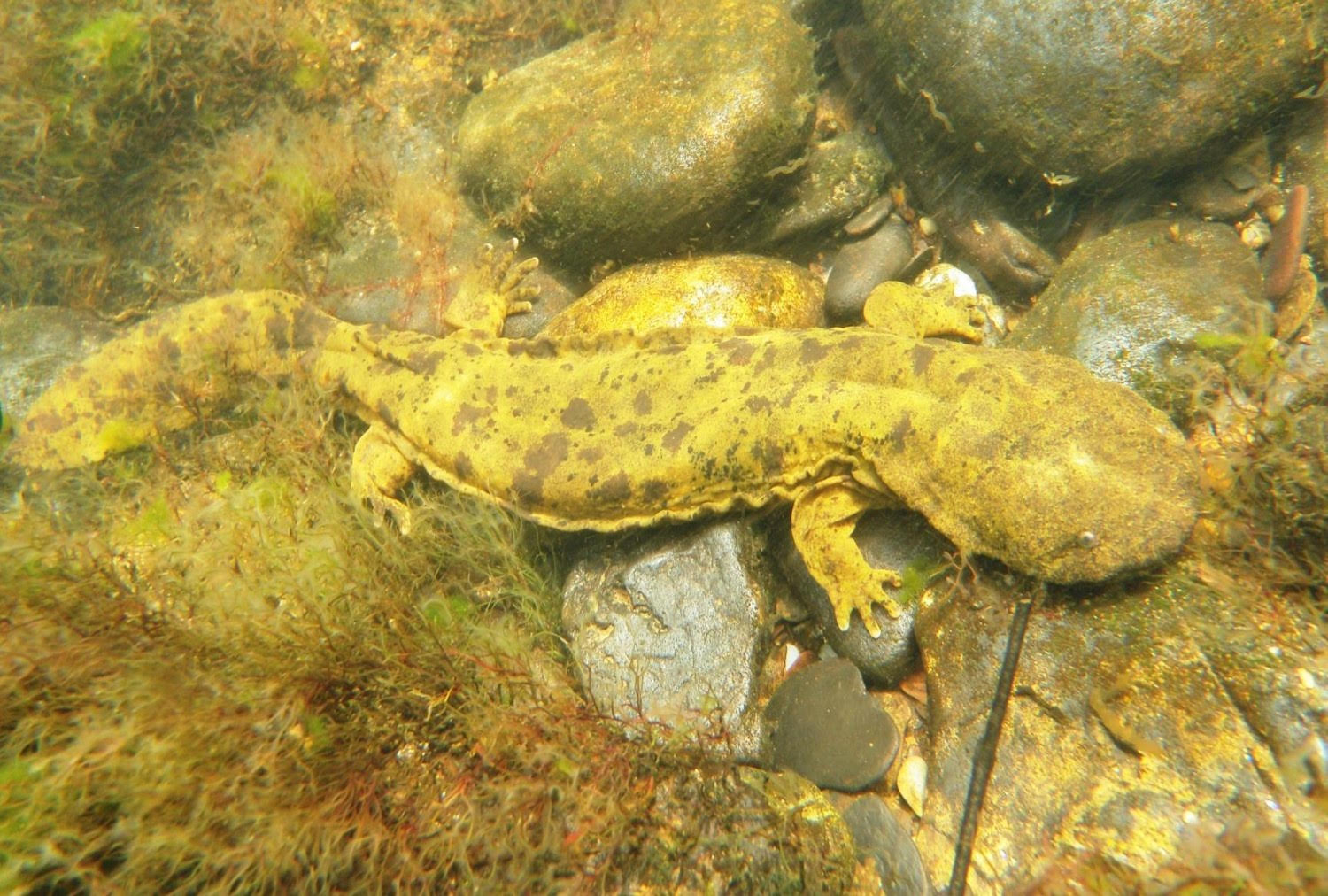
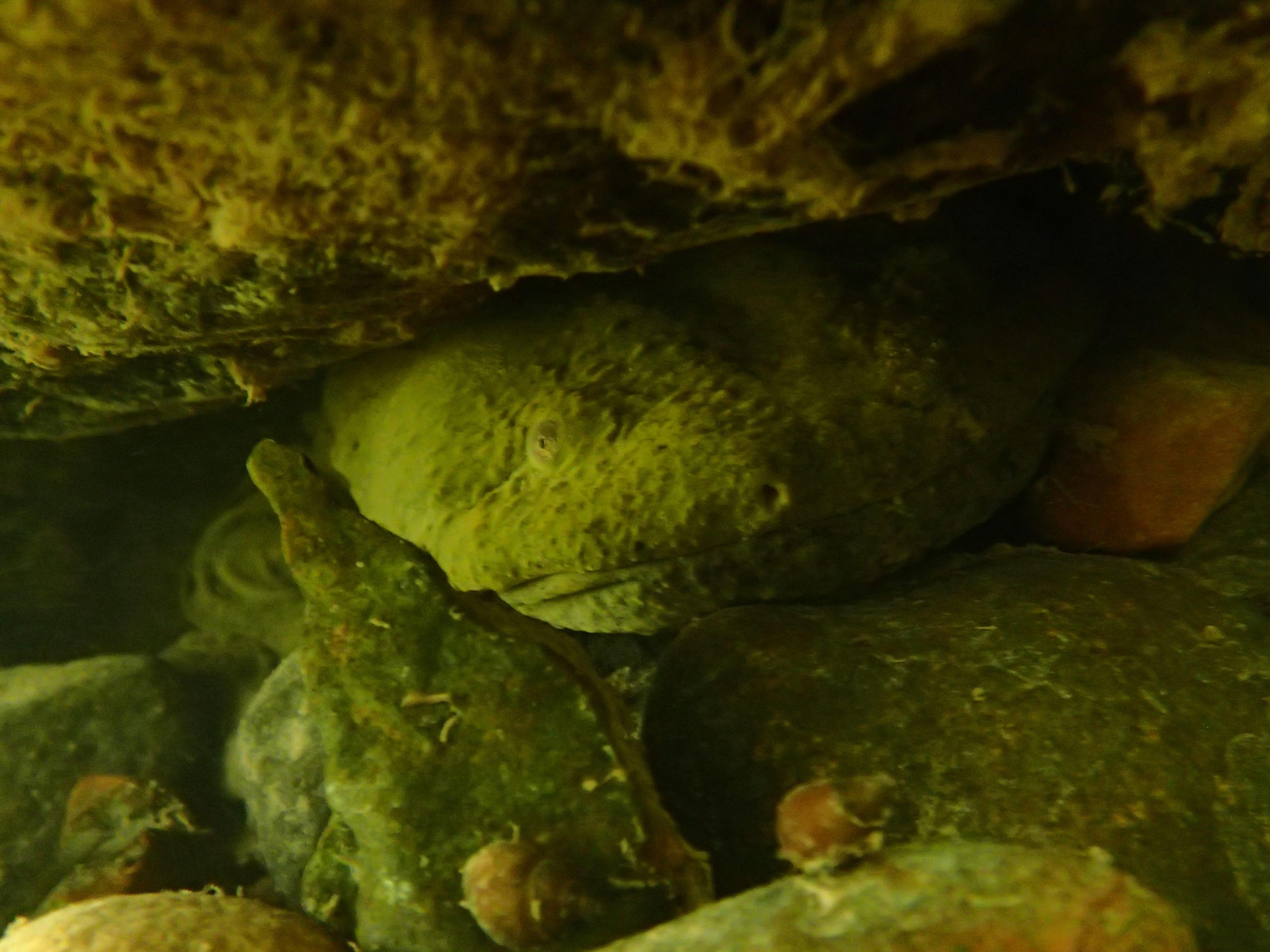
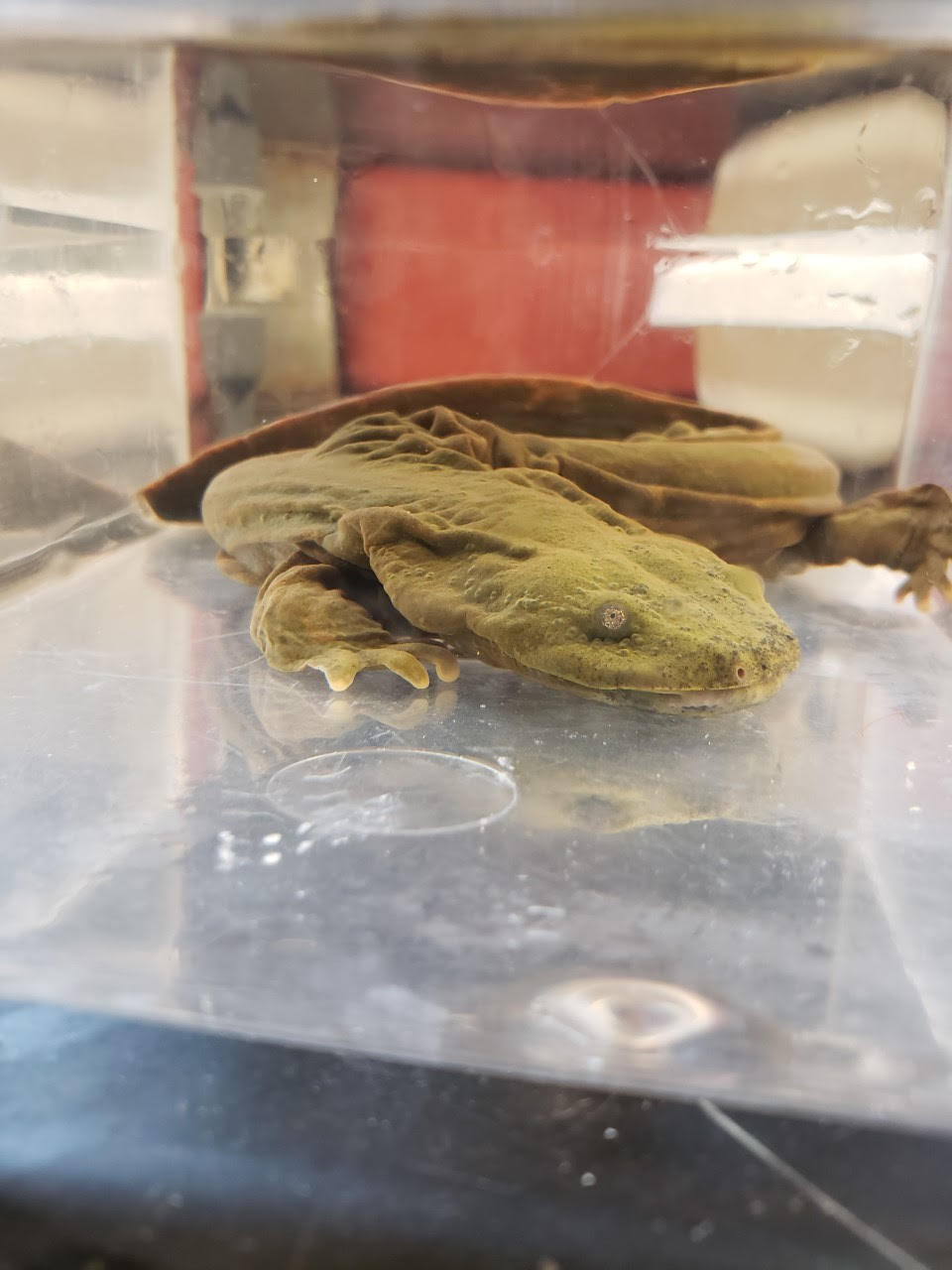
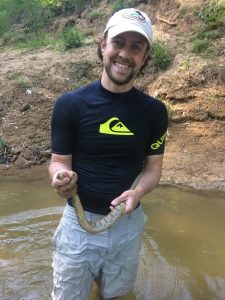 Hello everyone! For Episode Eight, we take a deep breath and submerge ourselves into the world of the Hellbender via a conversation with Nick Burgmeier. When it comes to cryptobranchids (hellbenders are in the family Cryptobranchidae, along with the Chinese and Japanese giant salamanders), Nick is a subject matter expert. I enjoyed talking with Nick on the subject, especially since he and his colleagues have made great progress in protecting Indiana hellbenders. Nick is featured in the photo at left, with a hellbender, which is inside the water snake he’s holding – we realize that even water snakes gotta eat, but why not a delicious bass?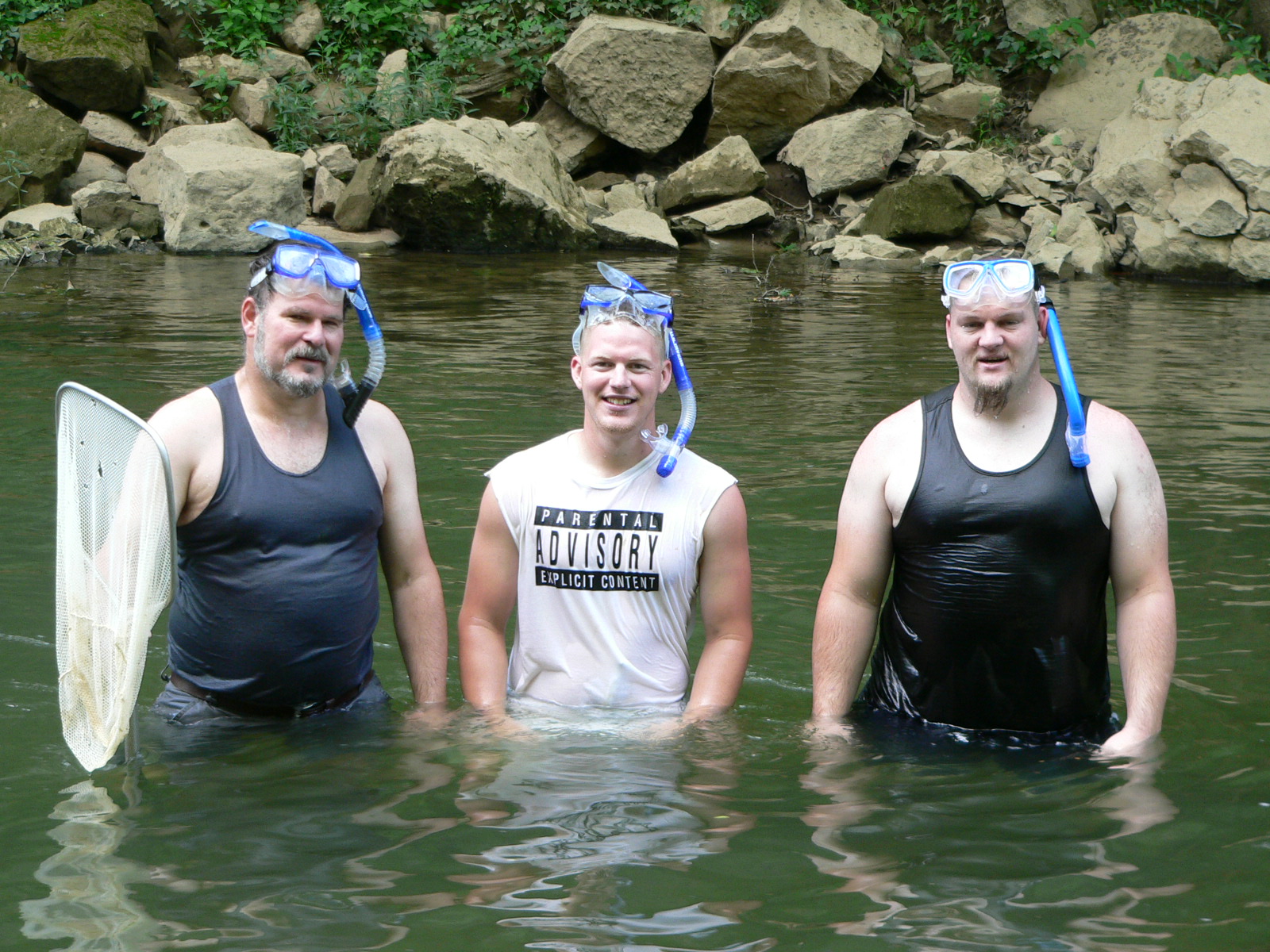
 Jill Rials is from Mesa, Arizona, and the critter she is holding is a smooth-fronted caiman (Paleosuchus trigonatus).
 Andrew DuBois is from Lakewood, Colorado. Here he is enjoying a Pinocchio Anole (Anolis proboscis) in Ecuador.
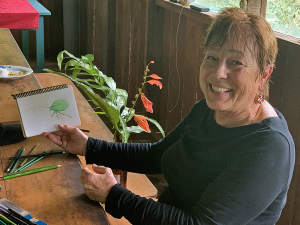 Cynthia Samake lives near Santa Fe, New Mexico. In this photo she is sketching a leaf-mimic katydid in our Madre Selva field station.
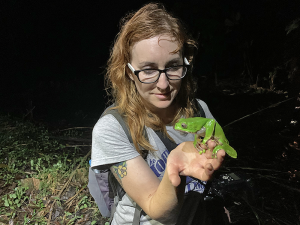 Elizabeth (Liz) Hughes lives in Phoenix, Arizona and here she is with her first giant monkey frog (Phyllomedusa bicolor).
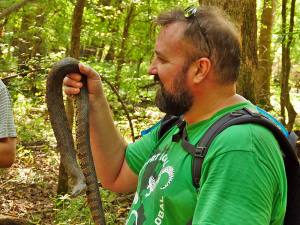 Justin Michels is from Pekin, Illinois. We herp in Illinois together quite often, and here he is with a large and thankfully tranquil diamondback water snake (Nerodia rhombifer).
 Hello everyone, and welcome to Episode Five! In this episode I talk with Peter Mooney, a birder, world traveler, and herper from the era when it was called “snake hunting”. A New Jersey native, Mr. Mooney served his country in Vietnam, and afterwards he spent time in teaching school in Jasper County, South Carolina. Along the way he knew many of the old-school east coast herpers.
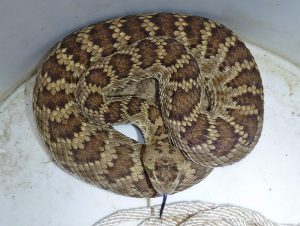 Hello everyone, and welcome to Episode Four! My apologies for being a few days late, I was doing some out-of-state herping. In New Jersey. And it was great! But that’s another story for another time.
 Hello again everyone! Thanks so much for your support, and your kind comments and messages! Much appreciated.